Middlesbrough News Featured post
Kim Jong-un: fragile and under pressure but he won’t give up
The Observer The North Korean leader’s surprise freeze of his nuclear programme is less a genuine move than a diplomatic manoeuvre,...

Friday, 31 August 2018

Trump’s stripping of passports from some Texas Latinos, explained
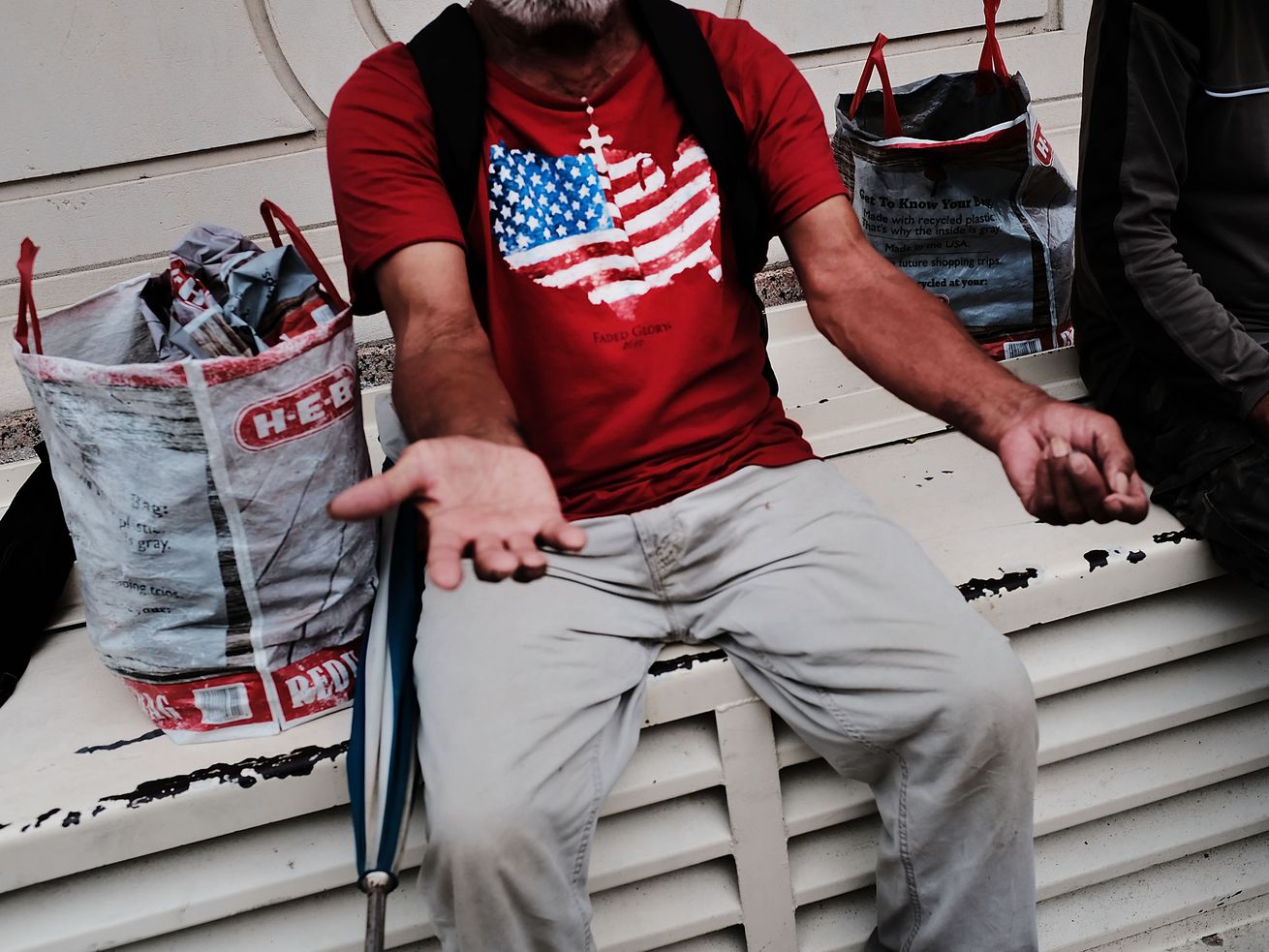
Trump keeps putting pressure on the soft parts of the immigration system — and people who aren’t necessarily able to fight back.
The Trump administration is engaging in an immigration crackdown in South Texas — against people who have birth certificates showing they were born in the United States.
According to a Washington Post report published Wednesday by Kevin Sieff, immigration lawyers in the area are reporting that “hundreds, even thousands” of Latinos born near the US-Mexico border are being told that their birth certificates aren’t sufficient proof of US citizenship to get their passports approved or renewed.
They’re being subjected to ridiculous document requests like baptismal records, and insulting interview questions like “Do you remember when you were born?” Some are having their existing passports revoked and being thrown in deportation proceedings, or even being barred from reentering the United States when they attempted to come back from Mexico.
A lot of people (not least immigrants and other nonwhite Americans) have already come to the conclusion that the Trump administration lacks any respect for them as Americans or as people; in that context, the denial of passports to native-born citizens can look like racism at best and state violence at worst.
As a general rule, the Trump administration’s immigration actions aren’t shocking because they’re unprecedented power grabs. Instead, they’re efforts to aggressively use the existing powers the executive branch already has — powers that have simply been used with more restraint in the past.
This story is no exception. It’s an escalation of an effort started by past presidents. The Trump administration has shown a knack (and a fervor) for finding the parts of the immigration system that give the most power to the government, and bringing their full strength to bear on people who are already vulnerable. It’s doing that in South Texas right now.
This is a new round of assaults on a community that was already under scrutiny
The new wave of passport scrutiny is specifically targeted at Latinos in South Texas, born near the US-Mexico border in particular circumstances.
State Department representatives told the Washington Post that “the U.S.-Mexico border region happens to be an area of the country where there has been a significant incidence of citizenship fraud.” That sounds like a racist excuse — playing into suspicions that even Latinos who have been living in Texas since before it was America aren’t really American, and conflations of Latinos, immigrants, and unauthorized immigrants — but there is a particular history behind it.
In the second half of the 20th century, the federal government cracked down on midwives in South Texas for birth certificate fraud: signing a birth certificate attesting to delivering a baby on US soil, when the baby had actually been born across the border in Mexico.
Between 1960 and 2008, at least 75 midwives practicing in South Texas were convicted of fraudulent activities. (A 2008 Brownsville Herald article, also by Kevin Sieff, puts the number at 79.)
The problem, of course, is that those midwives also signed a bunch of birth certificates for children who really had been born on US soil. There aren’t easy ways to tell real US births from false ones — especially when most families in infrastructure-poor and poverty-stricken South Texas couldn’t necessarily afford hospital birth.
Confusing matters even further, some families reportedly got birth certificates saying their US-born children had been born in Mexico, to allow them to attend public schools there.(Before the last couple of decades, it wasn’t uncommon for families to travel frequently between the US and Mexico, or even split time between the two on a weekly basis.)
In 2007, the US changed the law: Starting in 2009, it would start requiring everyone coming to the US from anywhere in the Western Hemisphere (including American citizens returning from Mexico) to show a passport. As that change approached, area Latinos started to complain that their passports were being denied because their birth certificates were deemed suspicious — prompting an ACLU lawsuit.
The lawsuit was filed in 2008 (under the Bush administration) and settled in 2009 — with the two sides agreeing to a process by which passport denials to midwife-born applicants would be reviewed. One of the documents in the settlement was a sample letter requesting more information from the applicant to supplement the record.
Some of the items on the list were faintly ridiculous — including baptismal records or evidence of prenatal care, both of which were cited in the Post article — but others were straightforward, if often difficult, requests for school and employment records.
Even after the settlement, rejections of midwife-issued birth certificates continued. In 2012, CNN wrote an article about the phenomenon; in 2014, NPR program Morning Edition ran a segment. Both articles quote Jaime Diez, a lawyer also quoted heavily in the Washington Post piece. They also include accounts of people having their passports taken from them as they tried to enter the US, being harassed by Border Patrol agents, and being forced to agree to their own deportation.
What’s changed under Trump appears to be mostly the scope of the denials: according to the attorneys the Post spoke to, at least, there’s been a “surge” in new denials, as well as of people being actually put into deportation proceedings (something that Immigration and Customs Enforcement officials can choose to do when a passport is denied for absence of evidence of US birth, but don’t have to do).
Additionally, the government appears to have expanded its “suspicions” not just to birth certificates signed by midwives, but those signed by longtime South Texas obstetrician Jorge Treviño — who delivered thousands of babies, often in home births, before his death in 2015. (One lawyer told the Post that the government has an affidavit from an anonymous Mexican doctor alleging that Treviño falsified a birth certificate; Treviño, being dead, can’t answer the allegations.)
But perhaps most importantly, this is happening under President Donald Trump, who hasn’t exactly built up a record of goodwill among immigrants, US-born Latinos, or white liberals. And so the report has raised concerns not only about the harassment facing the particular passport applicants in South Texas, but about how broadly the Trump administration could challenge the citizenship — and voting rights — of other groups as well.
The Trump administration is pushing on the soft parts of the immigration system
Most Americans assume there’s a clear-cut line between legal immigrants and unauthorized immigrants; between noncitizens and citizens; between immigrants who have been naturalized and citizens who were born here.
The Trump administration often sparks outrage for doing things that appear to cross those lines: arresting unauthorized immigrants at their green-card interviews; starting an effort to comb old naturalization applications for fraud, in an effort labeled a “denaturalization task force” by the press; and, now, questioning the citizenship of people who have lived for decades as native-born US citizens.
But in all of these cases, the administration isn’t crossing an unprecedented bright line. It’s exploiting places where the boundaries between categories are murkier — often by building on what past administrations had already done. (It wasn’t the Trump administration that collected a list of “suspicious” midwives, for example.)
Generally, these boundary areas are where immigration officials show the most caution. They have discretion in who they pursue and who they don’t — at the margins, they’re most likely to use their discretion to show sympathy to people who’ve been living in the US and have roots here, even if they could be more aggressive in trying to push them out.
It’s possible that the government has changed its policy across the board on birth certificates issued by midwives or other “suspicious” practitioners — or even for people born in the US to non-US citizens more broadly — though there’s no evidence for that.
It’s also possible that the government hasn’t changed policies, and is just fighting more of the individual cases that fall under the process set down in the 2009 settlement. (The government maintains that there’s been no policy change to passport adjudication, for what that’s worth — and the attorneys who spoke to the Post don’t allege a particular change in policy.)
This is what makes Trump officials’ immigration policy different: not necessarily what they’re doing, but how aggressively they’re doing it.
The Trump administration doesn’t have to deny every (or even any) application from someone whose birth certificate was signed by a “suspicious” practitioner. But it is using the full extent of the power given it by law. It’s easier to put pressure on groups that have already been targeted because they’ve already been targeted.
Targeting passport applicants in South Texas isn’t necessarily a test run for an inevitable expansion to the widespread revocation of citizenship for Latinos or nonwhite Americans writ large, just as the denaturalization efforts don’t automatically call the citizenship of all naturalized Americans into question.
This remains true because, crucially, the people being targeted still have recourse to the legal system. Even the South Texans whose birth certificates are challenged, the Post says, typically end up winning their cases — they just have to appeal to the federal courts to do it, which takes money (in the thousands) and time.
But that’s the other thing about a strategy of pushing on those who are already marginalized: They’re the ones least likely to have the resources to overcome harassment, or the support to call for an end to the practice.
from Vox - All https://www.vox.com/2018/8/30/17800410/trump-passport-birth-certificate-hispanic-denial-citizens
via HDMI Installers
The Michael Cohen, CNN, and Trump-Russia controversy, explained

There’s Lanny Davis, and a CNN story that’s come under fire. What’s really going on, and does Robert Mueller care?
Did Michael Cohen and his lawyer Lanny Davis hoodwink the media?
Late last month, in the midst of a federal investigation into Cohen, sources close to the former Trump lawyer made a bombshell claim to CNN. They said that, according to Cohen, Donald Trump himself knew in advance about his son Don Jr.’s secret meeting with a Russian delegation during the 2016 campaign. These anonymous sources added that Cohen would be happy to tell special counsel Robert Mueller all about this. And other media outlets, such as the Washington Post, soon heard similar things from a source close to Cohen.
Here’s the problem: Davis has now admitted that he was one of these anonymous sources, for multiple media outlets — but he’s reversed himself, saying he’s “not certain” that what he was telling the press about Cohen’s Russia scandal knowledge was actually accurate.
It’s all rather bizarre, and has led to criticism of CNN for running with the Cohen team’s anonymous claims in the first place — including from President Trump. (CNN has stood by its story, saying it had more than one source and that the story accurately described what Cohen’s team was saying.)
CNN is being torn apart from within based on their being caught in a major lie and refusing to admit the mistake. Sloppy @carlbernstein, a man who lives in the past and thinks like a degenerate fool, making up story after story, is being laughed at all over the country! Fake News
— Donald J. Trump (@realDonaldTrump) August 29, 2018
But the bigger picture is that a week after Cohen pleaded guilty to tax, bank fraud, and campaign finance charges — and implicated Trump in the latter of those — Cohen’s role in the larger Trump-Russia saga remains a question mark.
Was Cohen just lying all along — pretending to have crucial Trump-Russia information when he has no such thing? Or is he lying now, after it was pointed out to him that his previous sworn testimony to Congress was quite different from his new claims and could expose him to criminal charges? Or has he simply decided to start giving his information to investigators rather than leaking it to the press? The only thing that’s clear from Cohen is that the claims he and his team have been making have been inconsistent and unreliable.
Meanwhile, from Mueller’s side, it’s clear that Cohen has been a figure of some interest in his investigation — the special counsel’s team has questioned witnesses about matters related to Cohen, and wants to ask Trump at least two questions about him. But whether Mueller views Cohen as a key target, a potential cooperator, or a minor player of little importance remains unclear.
The bizarre, months-long spectacle of Cohen’s team telling reporters that he had bombshell Trump-Russia information
Ever since the FBI raided Cohen’s residence and office in April, a drama over whether he’ll “flip” on President Trump has unfolded, much of it in public via leaks from people close to him.
All the way back on June 13, ABC got word that Cohen was “likely to cooperate” with prosecutors. Days later, a Cohen friend leaked to CNN that he “if they want information on Trump, he’s willing to give it.”
It seemed big. But there were inklings of another motivation at work. Some outlets heard that what Cohen really wanted was for Trump to pay his legal fees, with one “source close to Cohen” even telling the Washington Examiner that he could stonewall investigators for the right price.
In early July, Cohen decided to make even more waves by hinting on the record to George Stephanopoulos that he was considering flipping — he said his main “loyalty” was to his family, not Trump.
Stephanopoulos also asked Cohen a curiously specific question — whether Trump knew about the infamous Trump Tower meeting beforehand. (This is, of course, Donald Trump Jr.’s meeting with a Russian lawyer to get dirt on Hillary Clinton in June 2016. The president has denied knowing anything about it at the time.) Cohen conspicuously declined to answer.
Soon afterward, Cohen hired Clinton ally and PR bulldog Lanny Davis, and the press began to report more tantalizing hints that Cohen had key Trump-Russia information. Two anonymous sources told CNN on July 9 that it would be dangerous for Trump if Cohen were to “tell the truth” about the Trump Tower meeting.
As I wrote at the time, there was reason to be deeply skeptical of Cohen’s motivations in all this. For one, it was deeply strange that Cohen was leaking what he supposedly knew to the press, rather than just telling prosecutors privately. It was almost as if he was trying to send a message to Trump — or even to shake down the president so he’d pay Cohen’s pesky legal bills.
The controversial CNN report and its aftermath
Finally, CNN ran the July 26 report that has caused the most controversy, bylined by Jim Sciutto, Marshall Cohen, and Watergate legend Carl Bernstein. The report says that, according to an unspecified number of “sources”:
- Cohen “claims” that Trump “knew in advance about the June 2016 meeting in Trump Tower in which Russians were expected to offer his campaign dirt on Hillary Clinton.”
- Cohen “is willing to make that assertion to special counsel Robert Mueller.”
- Cohen “alleges that he was present, along with several others, when Trump was informed of the Russians’ offer by Trump Jr. By Cohen’s account, Trump approved going ahead with the meeting with the Russians, according to sources.”
The report also contains a line that says Davis was contacted for the story and “declined to comment.” However, Davis now says that he was in fact one of the anonymous sources for the piece. He also was the sole anonymous source the Washington Post used to confirm CNN’s report.
The CNN story caused a sensation, suggesting to many that a breakthrough in the Trump-Russia investigation was finally imminent. Other rumors of what Cohen might know circulated to reporters, and even spurred Rudy Giuliani to go on TV and attempt to rebut follow-up stories on the topic that hadn’t been published yet.
But then another few weeks passed, and Cohen finally appeared in court to plead guilty to those tax, bank fraud, and campaign finance charges. And then a few days later, Davis began to tell reporters that no, he wasn’t sure if Cohen had bombshell Trump-Russia information after all, and that yes, he was an anonymous source for many of the stories that made that claim.
“I should have been more clear — including with you — that I could not independently confirm what happened,” Davis told the Post. “I regret my error.” (He also said that his claims might still be true, who’s to say, really.) President Trump then claimed vindication on Twitter:
Michaels Cohen’s attorney clarified the record, saying his client does not know if President Trump knew about the Trump Tower meeting (out of which came nothing!). The answer is that I did NOT know about the meeting. Just another phony story by the Fake News Media!
— Donald J. Trump (@realDonaldTrump) August 25, 2018
CNN, meanwhile, came under increasing criticism from conservatives and some mainstream media reporters for running the story in the first place. However, on Tuesday, Sciutto and Bernstein filed a follow-up CNN report essentially criticizing Davis for changing his story, while saying they stood by their initial report, which had “more than one source.”
However, it’s important to note that CNN is not saying — and has never said — that they’re vouching for Cohen’s story as true. The initial report only purported to describe Cohen’s “claims.” Obviously, it is possible for Cohen to be making false claims.
Still, there’s an understandable debate about whether CNN should have been more skeptical here, and whether they were used by Cohen and Davis — and, especially, there’s criticism that their sentence saying Davis declined to comment was very misleading, since he says he actually did comment anonymously (as Glenn Greenwald and others have argued).
Lanny Davis said he was a source who lied to CNN. That’s on him.
— Marc Caputo (@MarcACaputo) August 28, 2018
But CNN in the story in question wrote “one of Cohen's attorneys, Lanny Davis, declined to comment.”
That means CNN might have misled readers about talking to Davis. Thats a bigger problem than a source-burn https://t.co/l7BXtzHU6m
So what happened here?
To hear Lanny Davis tell it, he’s the goat. “I should not be talking to reporters on background about something I’m not certain about,” he told Fox News Tuesday. “If I had a redo in life, I wouldn’t have said anything about the subject.”
Yet as the timeline above shows, Cohen’s hints that he knew something about the Trump Tower meeting predated Davis’s hiring. Furthermore, there were so many such hints, over such a long period of time, that it was surely no isolated mistake. It was evidently part of a deliberate strategy, approved by Cohen, to convince the media that he had bombshell Russia scandal information — true or not.
This was a strange strategy. It does not actually seem to have been aimed at prosecutors, because the near-universal advice for someone in Cohen’s position is to say as little as possible publicly — prosecutors don’t like it when a potential cooperator leaks what they have to the media beforehand. Perhaps it was partly motivated by Cohen’s desire to change his image. But a more cynical possibility, as mentioned above, is that Cohen was really trying to get Trump’s attention with his PR blitz — to scare the president into paying his legal fees.
Which poses another question: Why the walkback now?
Cohen has pleaded guilty. In doing so, he went out of his way to implicate Trump in campaign finance violations. Hours after Cohen’s plea, Davis was telling MSNBC that Cohen “has knowledge on certain subjects that should be of interest” to Mueller — including, he said, “about the computer crime of hacking and whether or not Mr. Trump knew ahead of time about that crime.”
But all of a sudden, Davis changed his tune dramatically, saying that actually, Cohen may not know anything about the Trump Tower meeting, he’s not really sure.
There are a few possibilities as to why. First, there’s the perjury problem. Cohen, it turns out, had testified to Congress last year that he personally did not know anything about Don Jr.’s Trump Tower meeting beforehand, and that he had no idea whether Trump did. If this was in fact a lie, Cohen could be charged for lying to Congress. So some have speculated that Davis’s original claim was accurate but that he’s now walking it back to protect Cohen.
Second, there’s the possibility that Cohen is finally shutting up and cooperating. Maybe, at long last, Cohen has decided to rein in his weird PR play and start giving whatever information he does have to investigators (perhaps stopping the leaks at their request). However, his plea agreement conspicuously did not mention any cooperation and there’s no evidence that this is the case so far.
Finally, there’s the possibility that Cohen was lying all along about having important Trump-Russia information — that he was bluffing to try to get Trump cash, and that now that the bluff has failed, he’s just decided to stop putting out these false stories.
Cohen is of interest in the Mueller investigation, but it’s not clear how central he is
Meanwhile, special counsel Robert Mueller’s investigation has continued to move forward, far away from all this Cohen drama.
Though Mueller’s team initially found the information that led to the charges against Cohen, the special counsel and his boss, Deputy Attorney General Rod Rosenstein, handed it off to the US Attorney’s Office for the Southern District of New York (SDNY).
The exact reasons why Rosenstein and/or Mueller passed off this Cohen probe remain unclear. Perhaps they thought taxi medallions and sex scandal hush money were too far removed from Russia, perhaps it was a question of resources, perhaps they wanted to make it harder for Trump to retaliate by firing someone — or perhaps they decided that Cohen just wasn’t as important to the election interference investigation as, say, Paul Manafort or Roger Stone.
However, we do know that Mueller has been investigating Cohen for Russia-related reasons — and that he continued to even do so after the SDNY investigation began.
- Around March, Mueller’s team questioned the Russian oligarch Viktor Vekselberg at an airport. A company tied to Vekselberg had paid Cohen at least $500,000 through the shell company Essential Consultants in 2017.
- In April, around the time of the FBI raids on Cohen’s office, Mueller’s team reportedly questioned a business associate of the Trump Organization about Cohen’s involvement in business deals abroad.
- In June, Mueller interviewed a Ukrainian associate of Cohen’s, Andrii Artemenko, before the grand jury. Artemenko told the Washington Post afterward that he “realized that Michael Cohen is a target” of Mueller’s. (Early in the Trump administration, Cohen tried to get Artemenko’s proposal for a peace deal between Ukraine and Russia — reportedly on terms preferred by Russia — to National Security Adviser Michael Flynn.)
- Two of the questions Mueller’s team wanted to ask Trump, according to a leaked list, relate to Cohen. One is about Cohen’s efforts to make a deal to build a Trump Tower Moscow during the 2016 campaign, and the other is about Cohen and Artemenko’s Ukrainian peace proposal.
Longtime aficionados of the Russia scandal will recall that Cohen is also mentioned several times in the Steele dossier as a supposed central figure. But none of the specific allegations about him there have been confirmed, and both Cohen and Davis still say that the dossier’s claims about him are false.
In any case, though we’ve heard a whole lot from Cohen’s team about what he might be able to tell Mueller, we’ve heard far less about how Mueller views Cohen in this investigation.
Perhaps Mueller hoped the SDNY charges would make Cohen more cooperative and will hear out what he has to say soon. But so far as we know, the special counsel’s team has not yet asked to question Cohen at any point during its long investigation, despite their evident interest in him — suggesting they may also view him as a target. Or it’s possible that they looked into him for various reasons but decided there was nothing there.
But as Cohen approaches sentencing on financial and campaign charges, we don’t know whether the Cohen-Trump scandal saga is nearing an end — or whether it’s just beginning.
from Vox - All https://www.vox.com/2018/8/30/17795674/michael-cohen-trump-russia-mueller-cnn-lanny-davis
via HDMI Installers
The insidious cultural history of Kanye West’s slavery comments

Kanye thinks slavery was a choice. He’s not the only one.
Rapper, designer, and self-proclaimed avatar of “dragon energy” Kanye West has finally apologized for his controversial comments calling slavery a choice back in May.
“I want to take this moment right now to say that I’m sorry for hurting, I’m sorry for the one-two effect of the MAGA hat into the slave comment,” he told Chicago radio station WGCI 107.5 Thursday.
In May, West told the entertainment site TMZ that American slavery was a “choice.”
“When you hear about slavery for 400 years ... for 400 years?” he said. “That sounds like a choice.”
He later doubled down in a perplexing tweetstorm that included, among other things, an apocryphal quote likely falsely attributed to Harriet Tubman implying that enslaved people did not know they were slaves.
I freed a thousand slaves I could have freed a thousand more if only they knew they were slaves. - Harriet Tubman
— KANYE WEST (@kanyewest) May 2, 2018
West ultimately blamed his remarks on his now-diagnosed bipolar disorder.
But the particular narrative that West espoused is still worth discussing — not because it’s true (it isn’t) but because its pervasiveness tells us something about the means by which two distinctly American myths have become intertwined. West’s contention that slavery was a choice represents the intersection of decades’ worth of revisionist Civil War history with the “bootstrap” narrative of personal responsibility embedded in American culture. West’s latest viral message, in other words, is the culmination of tropes far older than he.
West is playing into common, ahistorical Civil War narratives
The first cultural trope West embraced was that of the “happy slave”: the enslaved person whose situation is, if not consensual, then nonetheless not really that bad. It’s a narrative we can find in fiction everywhere from Gone With the Wind to Song of the South. But, insidiously, this narrative isn’t limited to fiction. Generations of high school textbooks have elided the scale, scope, and significance of slavery, recharacterizing the Civil War as an internecine squabble over “states’ rights” rather than a war over the right to own slaves. (For an extensive discussion on why the Civil War was not, in fact, about states’ rights, check out Emily Badger’s excellent piece at the Pacific Standard.)
These textbooks — and parallel interpretations of history — often cleave along neat regional partisan lines, in part because school boards make curricular decisions at the state level.
In Texas in 2015, for example, a social studies textbook used in public schools made headlines when it informed students, “The Atlantic Slave Trade between the 1500s and 1800s brought millions of workers from Africa to the southern United States to work on agricultural plantations,” implying that enslaved people were “workers” traveling of their own volition. (The publisher, McGraw Hill, later apologized and said future printings would be corrected, offering a corrective sticker or reprint to anyone who requested it outright.) In 2018, another school, this time in Wisconsin, made headlines for assigning students to come up with “good reasons” for slavery.
In 2010, another Texas school board found itself divided over how best to teach the Civil War, with board Republicans leading a successful campaign to downplay the influence of slavery (as opposed to “states’ rights”) in inciting the conflict.
In practice, this means that the brutality and reach of slavery tends to be both underemphasized and undertaught in American public schools. A 2018 study by the Southern Poverty Law Center’s Teaching Tolerance project found that Civil War literacy among high school students was catastrophically low. Just 8 percent of high school seniors said slavery was the central cause of the Civil War. Only 44 percent knew that slavery was legal in all colonies during the American Revolution, and fewer than half knew that a constitutional amendment had formally ended slavery.
While the SPLC can be controversial (it’s been accused of being overly zealous in its classification of “hate groups”), it’s fair to say that the study accurately reflects the way the Civil War narrative is taught in American public schools.
West’s comments about slavery being a “choice,” therefore, need to be contextualized in a wider matrix: the idea that slavery was not that bad or that significant, and that its brutality was not sufficient in scale to, say, launch a catastrophic war. It is an idea that is embedded in parts of the American educational system at an institutional level and actively promulgated by state officials.
West’s words reflect centuries of American individualism
But West’s comments need to be viewed in another light too. His insistence that slavery is a choice needs to be understood in the context that for so much of American cultural history, everything is seen as a choice. The capitalist, individualist narrative of “personal responsibility” as a defining feature of the American cultural ethos is one that underpins nearly every American cultural institution.
Economically, we can see it in the ideology of pulling yourself up by your bootstraps celebrated in everything from the 19th-century novels of Horatio Alger to GOP talking points. Religiously, we can see it in distinctively American crazes like the Victorian era’s New Thought and the popularity of the Christian prosperity gospel, which implies that your piety directly impacts your pocketbook. It’s the ideology that underpins our Gwyneth Paltrow-inspired fantasies of “wellness,” our obsessive gym culture, and capitalist “empowerment” complexes like the skin care industry. Physically, spiritually, socially, we are — as a nation — fantasists of control.
It’s a trope that is also fiercely individualistic. It has little time for, say, structural inequality, or any -ism that might encroach on the total autonomy of a self that wants to, well, self-improve.
And so when racism and American individualism intersect, you get a particularly potent combination of cultural influences. The quintessentially American tendency to elide the severity of this country’s bloody racial history and the no less American tendency to emphasize personal agency over structural barriers results in a highly potent cocktail of cultural historicism.
It’s how we get what you might call the Bill Cosby school of “bootstrap” race relations in which, to quote Cosby’s infamous “Pound Cake” speech, racism is the result of black people doing “stupid things.” It’s how we get Housing and Urban Development Secretary Ben Carson referring to enslaved Africans as “immigrants” in the hope of a better life. It’s how we get Education Secretary Betsy DeVos praising historically black colleges and universities as a paradigmatic example of free choice — as if all that was standing between a young black boy and Harvard in 1867 was his personal inclination.
Kanye West’s whole personal brand comes from embodying cultural tropes
West has always embraced the mythos of individualism — when it comes to himself, at any rate, whether he’s talking about the “dragon energy” that he says fuels both him and Donald Trump or referring to himself (repeatedly) as a “genius” or “the greatest artist of all time.” His effectiveness as a public figure (like that of many self-proclaimed great artists) rests squarely on the mythos of singularity: He is not just above, say, bourgeois norms or manners but also “above” any structural issues like, say, racism.
To allow an ethic of solidarity would be, in West’s ethic, to admit weakness. His worldview is binary: There are dragons (like West and Trump), and there are non-dragons. If West has “made himself” into a dragon, metaphorically speaking, it must be entirely because of his merit or genius. And that merit-based worldview does not allow for significant equality of opportunity.
That’s not to excuse or explain away anything West has said. Rather, it’s to argue that West’s controversy and his celebrity come from the exact same place: His persona is a public caricature designed to channel and capitalize on the very cultural forces that form the foundation of his worldview.
And, whether or not we want to admit it, ours.
from Vox - All https://www.vox.com/2018/5/2/17311148/kanye-west-slavery-choice-harriet-tubman-quote-comments-trump
via HDMI Installers
Brett Kavanaugh confirmation tracker: where every senator stands on Trump’s Supreme Court nominee

With Rand Paul voicing support, the Democrats’ slim chances of opposing his nomination got even slimmer.
The odds are in favor of the US Senate confirming Brett Kavanaugh to the Supreme Court.
Most Republicans senators have quickly lined up behind Kavanaugh, who would surely swing the Court’s ideology to the right. They have either endorsed him outright or heaped praise on Trump’s nominee, while noting that they take their judicial confirmation responsibility seriously. Even moderates Lisa Murkowski (R-AK) and Susan Collins (R-ME) — the Republicans most likely on the fence — have spoken favorably of the Kavanaugh.
from Vox - All https://www.vox.com/2018/7/12/17561692/senate-kavanaugh-confirmation-tracker
via HDMI Installers
Hearing loss affects 1 in 4 adults in the US. Is our noisy world to blame?

Noise pollution has become a major, underappreciated health threat.
The World Health Organization has called environmental noise an “underestimated threat.” In the US, one in four adults in the US show signs of noise-induced hearing loss, and hearing loss (from all causes) is now the third most common chronic health condition in the US, just after diabetes and cancer.
This is frustrating because hearing loss is both irreparable and preventable. If we were more aware of the harms of blasting loud music, we would reduce noise pollution from the source. And if we knew to protect our ears from noise, we would reduce our risk of losing our hearing — the same way we know sunscreen protects us against skin cancer and condoms reduce our risk of STDs.
To better understand the impact of the din most of us now have to contend with, Vox reporter Julia Belluz dived into how noise-induced hearing loss works — and how it damages our health and well-being. Here’s what you need to know.
from Vox - All https://www.vox.com/2018/8/30/17431004/noise-pollution-hearing-loss-loud-tinnitus
via HDMI Installers